

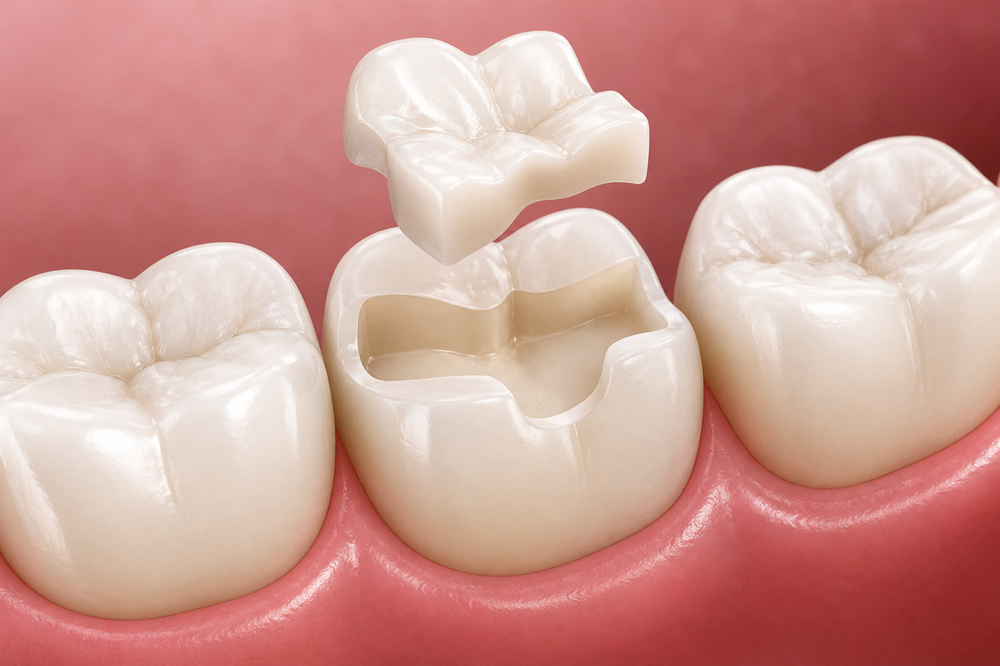
What is the best way to repair damaged teeth? When fixing damaged teeth, it’s important to save as much of your natural tooth as possible. Dental inlays are a gentle and long-lasting way to restore teeth while keeping them strong. Unlike regular fillings, inlays are made to fit the exact shape of the cavity, removing very little healthy tooth and giving a strong, precise fit.
Understanding how tooth-preserving dental restoration works can help you make informed decisions about protecting your oral health and extending the life of your natural teeth.
What are Dental Inlays?
Dental inlays are used to fix teeth with moderate decay or damage, without needing a full crown. They are made from porcelain, composite resin, or gold in a dental lab to fit the exact shape of your cavity. Then, the inlay is glued into your tooth, giving a strong and smooth surface.
Unlike regular fillings, which are put directly in your tooth, inlays are custom-made, making them more precise and long-lasting.
How Dental Inlays Preserve Natural Tooth Structure
A big advantage of dental inlays is that they keep most of your natural tooth. The dentist only removes the damaged part. This helps:
- Keep more of your real tooth.
- Put less pressure on the tooth than bigger fillings or crowns.
- Stop future cracks or problems.
- Protect the teeth around it.
By saving your natural tooth, inlays help your teeth stay strong and healthy for many years if you take care of them.
Benefits of Dental Inlays Over Traditional Fillings
Dental inlays near you provide several advantages compared to conventional fillings:
- Last a long time: Made from strong materials like porcelain or gold, inlays can last 10–30 years.
- Perfect fit: Made in a lab to fit exactly, which lowers the chance of gaps or future decay.
- Stay white: Porcelain inlays don’t stain easily, keeping your smile bright.
- Chew better: Inlays repair the chewing part of your tooth, so eating is easier and more comfortable.
- Keep your tooth: Only the damaged part is taken out, leaving most of your natural tooth.
- Minimal Tooth Reduction: Only the damaged portion is removed, protecting the natural structure of the tooth.
Who Can Benefit from Dental Inlays?
Dental inlays are suitable for patients who have:
- Moderate decay between the cusps of the tooth
- Cracks or fractures that do not require a full crown
- Previously treated teeth with large fillings that need reinforcement
Patients looking for tooth-preserving dental restoration often prefer inlays because they maintain more of the natural tooth than traditional crowns or large fillings.
The Procedure for Dental Inlays
The process for placing dental inlays typically involves two visits to a dental clinic in West Edmonton:
Initial Consultation and Preparation
- The dentist removes the damaged or decayed portion of the tooth.
- Impressions of the tooth are taken to create a precise inlay.
- A temporary filling may be placed to protect the tooth.
Placement of the Custom Inlay
- The inlay is bonded to the tooth with a strong dental adhesive.
- The dentist near you ensures a perfect fit and smooth bite alignment.
- Polishing is done to restore the natural shape and shine.
This precise process ensures that the inlay not only restores function but also looks and feels like a natural part of the tooth.
Caring for Dental Inlays
Proper care is essential to maximize the longevity of dental inlays:
- Brush twice daily with fluoride toothpaste
- Floss carefully around the inlay to prevent plaque buildup
- Avoid biting hard objects, such as ice or pens
- Attend regular dental checkups to monitor the inlay and surrounding teeth
With consistent care, dental inlays can provide decades of reliable service, maintaining both your oral health and smile aesthetics.
Why Choose Dental Inlays for Tooth Preservation
Dental inlays are great for people who want to keep as much of their natural tooth as possible while fixing damage. They are strong, fit perfectly, and last a long time. Inlays help protect your teeth from more decay or cracks, make chewing easier, give a smooth surface, and keep your mouth healthy.
For anyone considering tooth-preserving dental restoration, inlays represent a high-quality solution that balances functionality, aesthetics, and longevity.
Take Action for a Strong, Healthy Smile!
Protect your natural teeth and help them work properly with dental inlays. Visit West Edmonton Dental Choice for a consultation to find the best treatment for you and get expert advice. With proper care, regular check-ups, and maintenance, your teeth can stay healthy and strong for many years. Start today for a confident, long-lasting and natural smile!
FAQs
How long do dental inlays last?
Dental inlays usually last 10 to 30 years, depending on how well you care for your teeth, the material used, and your dental habits.
Can a dental inlay be replaced if it’s damaged?
Yes! If an inlay chips or wears out, it can be replaced without harming the rest of your tooth.
Are inlays better than fillings?
Yes. Inlays are more durable, preserve more natural tooth structure, and provide a precise fit, reducing the risk of future decay.
Is the procedure for inlays suitable for all teeth?
Dental inlays are ideal for molars and premolars where chewing forces are higher, but your dentist will assess each tooth individually for suitability.


