

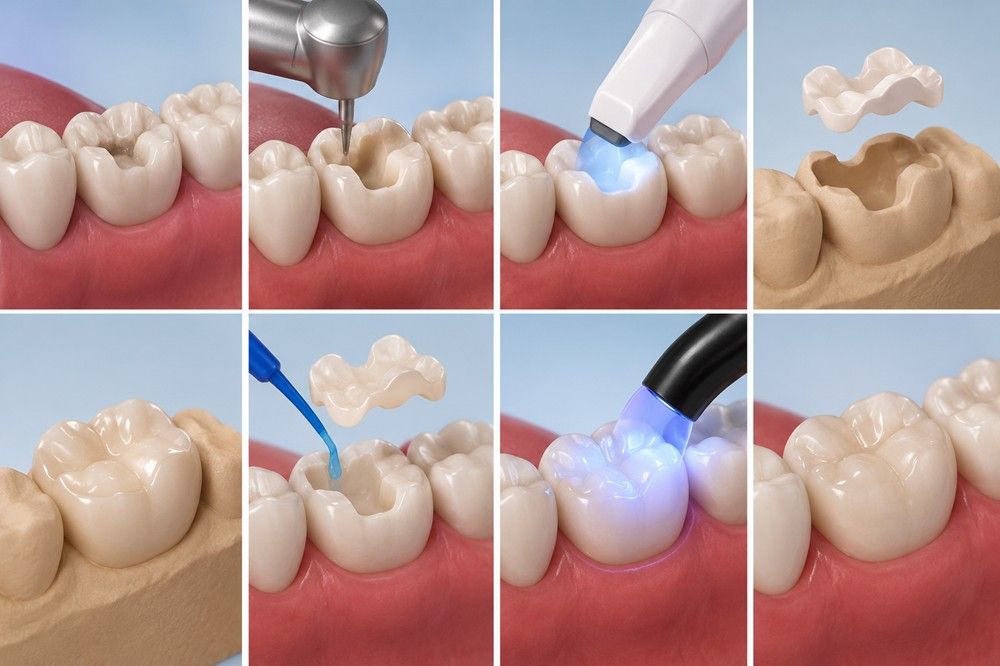
If you are searching for dental Inlays & Onlays near you, this guide will help you understand each step in a simple and clear way. Inlays and onlays are used to repair teeth that have damage from decay or wear, but are not broken beyond repair. They help restore shape, comfort, and normal chewing without removing too much of the natural tooth.
These treatments are often suggested when a regular filling is not enough, but a full crown is not required.
What are Dental Inlays and Onlays Used For?
Dental inlays and onlays are small restorations placed on back teeth. They are made to fit the damaged area precisely.
- Inlays fit inside the tooth’s surface between the raised edges
- Onlays cover a larger area and may include one or more chewing points
They are used when:
- A tooth has moderate decay
- A filling has failed or broken
- The tooth needs more strength, but not full coverage
How Does the Process Start?
When you visit a dentist in West Edmonton, the first step is always a detailed check of your teeth. It helps decide if an inlay or onlay is the right choice.
Initial Examination Includes:
- Looking at the tooth with a mirror and light
- Taking X-rays if needed
- Checking how the tooth bites with others
- Discussing pain or sensitivity
At this stage, the dentist explains whether the tooth can be saved with an inlay or onlay or if another option is needed.
Step-by-Step Procedure: What Happens During Treatment?
1. Numbing the Tooth
A small amount of numbing gel and local numbing is used so you stay comfortable during the procedure.
2. Removing Damaged Area
The damaged or decayed part of the tooth is carefully removed. Only the affected area is cleaned, so most of the healthy tooth stays untouched.
3. Taking an Impression
A mold of your tooth is made. It can be done using soft material or a digital scan.
|
Step |
Purpose |
|
Impression or scan |
Creates a precise model of your tooth |
|
Shade selection |
Matches the color of your natural teeth |
| Temporary cover |
Protects the tooth while the inlay/onlay is made |
4. Temporary Protection
A temporary cover is placed on the tooth. It helps protect it while the final piece is being prepared in a lab.
5. Creating the Inlay or Onlay
A dental lab creates the inlay or onlay based on your tooth shape. It is designed to fit closely and match your bite.
6. Final Fitting
When everything is done, the provisional cover will be taken out. The final inlay or onlay will then be inserted.
7. Cementation in Place
This step involves bonding the inlay or onlay onto your tooth using dental cement. A special light may help cement it into place.
How Long Does the Treatment Take?
The procedure typically requires two appointments:
- 1st appointment: Consultation, cleaning, and impression.
- 2nd appointment: Placement of the final inlay/onlay and adjustment.
Both appointments will be carefully planned for a hassle-free experience.
What Should You Expect After the Procedure?
After treatment, your tooth may feel slightly different for a short time. It is normal and improves quickly.
Simple Aftercare Tips:
- Avoid chewing hard food for a few hours
- Brush gently around the treated tooth
- Floss daily to keep the area clean
- Visit your dentist near you for regular checkups
Most people return to normal eating habits within a day or two.
Why Do Dentists Recommend Inlays and Onlays?
Such fillings aid in protecting your teeth without having to take away a lot of structure.
They:
- Provide more strength to weak teeth.
- Make chewing easier.
- Match the shape of the tooth well.
- Are more durable than normal fillings in most instances.
They also help reduce the need for more complex treatment later.
When Should You Consider This Treatment?
You may need inlays or onlays if you notice:
- Pain while chewing
- A large cavity in a tooth
- A broken or worn filling
- Sensitivity to hot or cold food
Early care helps prevent further damage and keeps the tooth stable.
Can Inlays and Onlays Be Prevented?
Yes, in many cases. Simple daily habits can lower the chance of tooth damage:
- Brush twice a day
- Floss once daily
- Reduce sugary snacks
- Visit a dental clinic regularly for cleaning and checks
Small steps can protect your teeth for a long time.
A Simple Path to Restoring Your Smile at West Edmonton Dental Choice
Choosing the right care makes a big difference when dealing with damaged teeth. Inlays and onlays are designed to restore strength and comfort while keeping your natural tooth as much as possible.
At West Edmonton Dental Choice, each step is clearly explained so you always know what to expect, from the first check to the final placement, with a focus on comfort and careful care. If you’re considering restoring a damaged tooth or exploring treatment options, now is a good time to book a visit and get clear answers in a calm, welcoming setting.
FAQs:
Will this procedure be painful?
The procedure takes place in a numbed area, so you will not feel any pain.
What is the lifespan of an inlay or onlay?
Inlays and onlays may serve you for many years, depending on your oral hygiene practices.
Will this treatment require two appointments?
Yes, two separate appointments are required for the completion of an inlay or onlay.
Will I be able to have a regular diet after treatment?
Most patients eat as they did before, after the treatment process is completed.


